

A podcast for when life and faith go off script. Hosted by Michael Frost.
Episodes
Jun 7, 2019
Jun 7, 2019
35 min
Episode 16: At the centre of Christianity is a non-violent revolutionary who rejects traditional modes of power, and is executed by the combined forces of empire and religion. But the new life that emerges in the wake of his death inspires his followers to believe that self-giving love is ultimately more powerful than the strength, might and violence of these dominant systems that sought to oppress others. So what could it mean for us to live in the wake of this subversion of power?
May 24, 2019
May 24, 2019
31 min
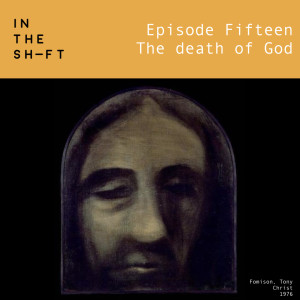
Episode 15: This is the second of 3 episodes exploring the meaning of the death of Jesus. Nietzsche famously said that God is dead and we have killed him. Was he right? Perhaps the answer is yes... and no. In this episode we explore how the cross becomes an icon for the death of God, or at least of many ideas we have of God. And yet it also becomes the location of divine solidarity; the presence of the divine that can be found in absence, in suffering and on the margins.
May 10, 2019
May 10, 2019
31 min
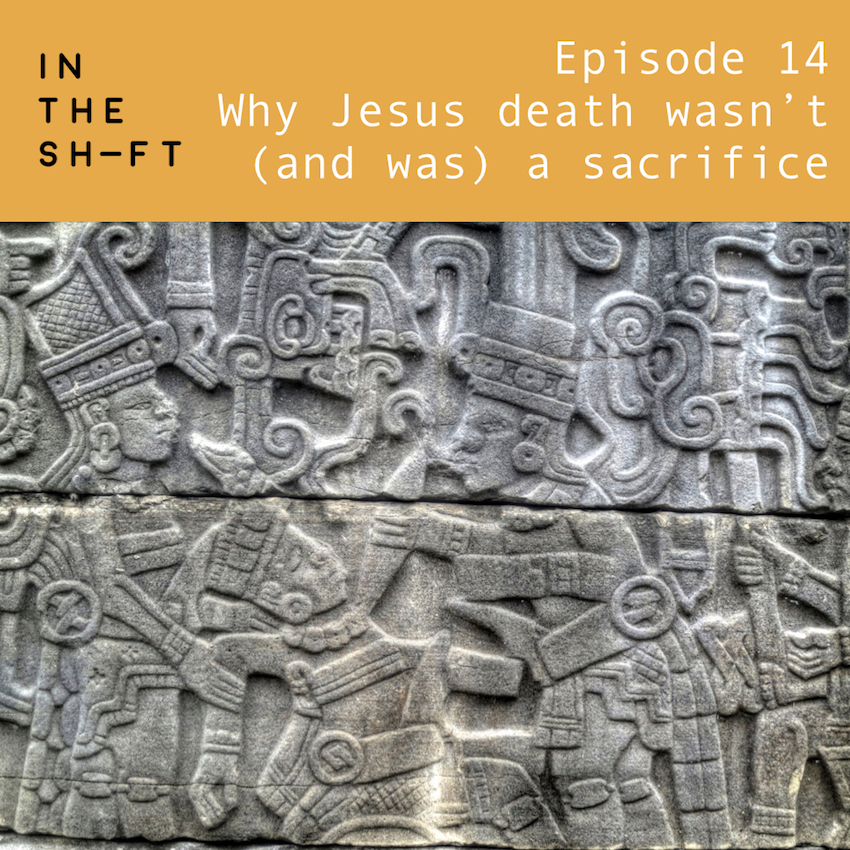
Episode 14: Does God require the blood of an innocent man in order to forgive us? But if not, then what does the death of Jesus mean in the Christian tradition? In this episode, we examine the emergence of sacrificial rituals in ancient societies, the connection to violence and scapegoating, and how the death of Jesus can be understood as a rejection of sacrificial systems as the means to peace.
Apr 26, 2019
Apr 26, 2019
32 min
Episode 13: One of the questions that has come up in response to the latest series on hell, has been: if Christianity is not about escaping eternity in hell, then why do so many people – Christians or not – understand this to be the central message and purpose of Christianity? How the hell did we get here?
In this episode we explore some of the key historical movements that contribute towards a Christian tradition that so often claims a belief in hell as eternal suffering, and the related lack of openness to different perspectives. From early Christianity to Constantine, Augustine, and Calvin... how did we get here, and what does this mean?
Apr 12, 2019
Apr 12, 2019
33 min
Episode 12: This is the final episode in our 3-part series on hell. In this episode we look at the implications of belief in hell as eternal suffering for unbelievers, and the way it is connected to a sense of superiority, religious xenophobia, and the abdication of responsibility for issues of social and environmental concern.

Mar 29, 2019
Mar 29, 2019
46 min
Episode 11: This is the 2nd in a 3-part series on the traditional Christian idea of hell. In this episode we explore the logic of the historical Christian doctrine of eternal torment for unbelievers, and examine why this is inconsistent with the story of Jesus. But if this is not the best way to frame Christian belief, then what are the alternatives?
Mar 15, 2019
Mar 15, 2019
37 min
Episode 10: This if the first in a 3-part series on the traditional Christian idea of hell. We begin by asking that if our ideas about God are supposedly centred around notions of goodness, reconciliation and love for the 'other', then isn't this at odds with the idea of a God who eternally punishes people for not being in the right religious club? Isn’t this the ultimate act of violence?
In light of these questions, we take another look at the terms used in the Christian bible that are translated as "hell" and why they might not mean what you think.
Mar 1, 2019
Mar 1, 2019
37 min
Episode 9: The final episode in our 3-part series on violence in scripture. In this episode we discuss how certain depictions of God in the Christian tradition seem somewhat paradoxical. On the one hand, God is loving and merciful and forgiving, and yet on the other hand, certain texts in the bible give us the idea that God takes violence into their own hands. Whether it be to command the people of God to obliterate their enemies (including their children) or to directly carry out this violence by the divine hand; divine acts of violent justice wherein the evil are swept away by a flood, drowned in a river, swallowed up by a sudden giant chasm in the ground...
So what do we do with this? Because if we just find ways to put this aside - while simultaneously believing it as many Christians are trained to do - then although the everyday God we believe in is good, the God that hovers over our shoulder is the one who is capable of genocide. This paradox can lie hidden for years, but it ultimately manifests itself in our real world anxieties, behaviours, ethics and spirituality.
Feb 15, 2019
Feb 15, 2019
45 min
Episode 8: The 2nd in a three-part conversation on violence in scripture, in this episode we explore the topic of patriarchal violence in the bible. What do we do with the shocking and pervasive violence and oppression against women that we find in the biblical stories, and what does it have to do with some of the challenges we face in the present day? We don't have to look too far to realise that we've got similar problems to those found in these ancient stories, and any religious beliefs that contribute to the subjugation, oppression and abuse of women need confronting and dismantling.
For some relevant and substantive books by women in biblical scholarship, check out Wil Gafney's "Womanist Midrash", Phyllis Tribble's "Texts of Terror" and the volume, "Vindicating the Vixens" edited by Sandra Glahn.
Feb 1, 2019
Feb 1, 2019
44 min
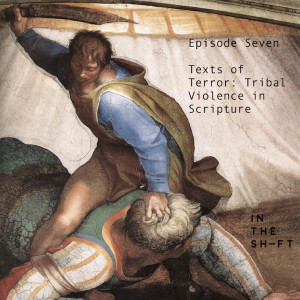
Episode 7: In this episode we begin a three-part series on violence in the biblical text; exploring the way that tribal violence, patriarchal violence and divine violence are portrayed. If God is love and the sustainer of all life, then what do we do with all of this violence that seems to be endorsed and promoted in the sacred text of the Christian tradition?
Because either this tells us that God is violent, and the bible is outdated and not worth reading, or we can ask the question as to whether there’s a different approach to these stories. Not an approach that justifies the behaviour, because the violence we see in these stories is genuinely horrific and cannot be redeemed, but that allows us to come at it with a different purpose in mind.